
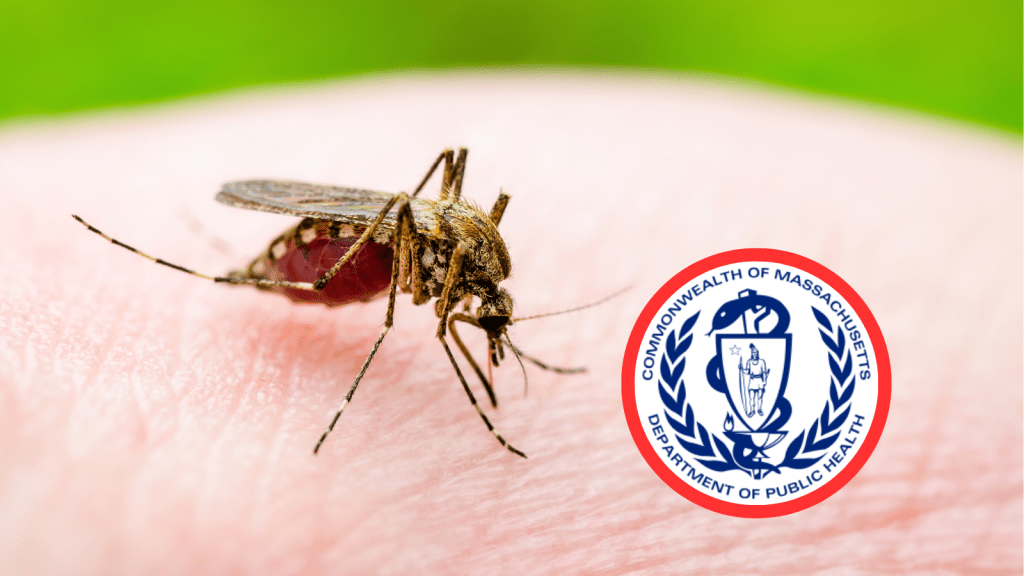
The Massachusetts Department of Public Health (DPH) intensifies its EEE alert after detecting the Eastern equine encephalitis (EEE) virus in Brimfield on September 13. The EEE alert raises the risk to high in three more communities in Massachusetts. The Massachusetts Department of Public Health is taking on the fight against EEE in Massachusetts.
Recent Findings Prompt EEE Alert
The recent detection has increased the EEE risk to high in communities of Brimfield, Sturbridge, and Holland, with Wales set at a moderate risk. Previously, six other communities were labeled at high risk: Douglas, Dudley, Oxford, Southbridge, Sutton, and Webster. Additionally, Auburn, Charlton, Grafton, Millbury, Northbridge, and Uxbridge are at moderate risk.
Impact on Public Activities and Warnings
Despite cooler forecasts, which are expected to dampen mosquito activity, the potential for the EEE virus to transmit from mosquitoes to humans persists. “The risk for spread of EEE virus from mosquitoes to people is still present.” warns Dr. Catherine M. Brown, State Epidemiologist. She added, “Everyone in these moderate- and high-risk areas should take the recommended steps to prevent mosquito bites; this includes avoiding outdoor activity between dusk and dawn in the high-risk communities.”
Understanding EEE and Its Prevalence
EEE, although rare, is a severe and possibly fatal ailment that can target any age group. It typically transfers to humans via infected mosquito bites. In 2019, the state witnessed 12 human EEE cases with six fatalities, and in 2020, there were five cases and one death. Meanwhile, both 2021 and 2022 saw no cases. No human or animal case has been reported so far this year.
EEE Alert: Steps for Public Safety
Preventing Mosquito Bites
Residents should prioritize personal protection. When outdoors, apply insect repellent with EPA-registered ingredients like DEET, permethrin, picaridin, oil of lemon eucalyptus, or IR3535 following label instructions. Notably, DEET should not be applied to infants below two months, and concentrations should not exceed 30% for older children. Oil of lemon eucalyptus isn’t advised for children under three.
During peak mosquito hours, from dusk till dawn, individuals should consider rescheduling outdoor plans in high-risk regions. Clothing, too, plays a vital role. Wearing long-sleeved outfits, long trousers, and socks can minimize mosquito exposure.
Household Measures
Homeowners are urged to be vigilant. Drain standing water, a common breeding ground for mosquitoes. This includes checking rain gutters and discarding unused flowerpots and wading pools. Securing homes with tight-fitting window and door screens can keep mosquitoes at bay.
Animal Safety Protocols
For animal owners, eliminating potential breeding grounds like containers holding water is crucial, especially after significant rainfall. Water troughs, which can be mosquito hotspots, should be cleaned weekly. Horses are best kept indoors at night, reducing EEE exposure risks. Veterinarian consultations for approved repellents and vaccinations against WNV and EEE are recommended. Suspected cases in animals should be promptly reported to the Department of Agricultural Resources and the Department of Public Health.
For comprehensive details on EEE and WNV results, the Arbovirus Surveillance Information web page at Mosquito-borne Diseases | Mass.gov provides daily updates.
 Xylo News