
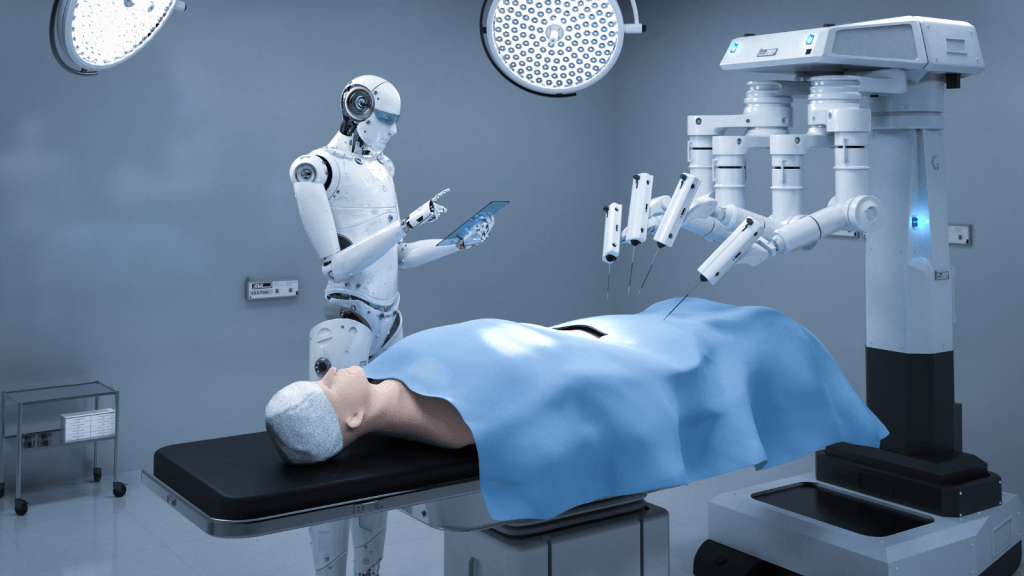
At the American College of Surgeons (ACS) Clinical Congress 2023, a panel of top surgeons engaged in an insightful discussion on the pivotal role artificial intelligence (AI) is currently playing and will continue to play in the field of surgery. The panel, consisting of innovators in surgical AI, convened on Monday, October 23, in Boston, Massachusetts, aiming to shed light on how AI has moved from a concept of the future to a transformative reality in surgical care today.
During the session, the group of experts provided in-depth perspectives on how AI is actively enhancing the safety and effectiveness of patient care at every surgical stage. Notably, the event underscored the importance of AI in predicting and preventing complications across preoperative, intraoperative, and postoperative settings.
Predictive Power of AI in Surgery
The surgeons shared significant progress in AI’s capability to foresee adverse events. For instance, machine learning models are now being leveraged to make critical postoperative care decisions. They can recommend whether a patient should be moved to intensive care or a regular hospital floor after surgery. This predictive analysis serves as a key step in improving patient pathways and ensuring timely interventions when necessary.
AI and Decision-Making Under Pressure
Particularly in high-stakes surgical scenarios, AI is proving to be a critical ally. Rachael A. Callcut, MD, from the University of California, Davis, emphasized that AI assists in managing the overwhelming data that medical providers must process, enhancing decision-making during time-sensitive procedures. Consequently, these technological advancements allow for safer and more efficient surgical outcomes.
Enhancing Precision with AI in Surgery
Dr. Danielle S. Walsh provided practical examples of AI’s impact, such as during gallbladder surgery, where AI helps to ensure the correct surgical actions are taken, reducing the risk of errors. AI’s role in increasing the precision of surgical procedures stands as a testament to its potential to elevate the standard of patient care.
The Human Element in AI Integration
However, despite the remarkable strides in technology, the surgeons highlighted the continuing importance of the human aspect in healthcare. They unanimously agreed that AI would not diminish the essential patient-physician relationship. Instead, AI is envisioned to enhance this connection by automating routine tasks and allowing healthcare professionals to focus more on the patient.
Personalized Care through AI in Surgy
Tailoring AI to individual patient needs was also a focus of the discussion. AI’s potential to assist in complex surgical decisions by offering precise outcome predictions and recommendations based on patient values underscores its role in delivering personalized patient care.
Legal Considerations and Responsibilities
Christopher J. Tignanelli, MD, brought attention to the legal implications that accompany AI integration. With new technology come new responsibilities, and potential liabilities for physicians, health systems, and AI developers must be carefully navigated. He underscored the necessity of establishing standard practices and a clear legal framework as AI becomes a staple in surgical practices.
The Symbiosis of Human and AI in Surgery
Gabriel A. Brat, MD, underscored the synergistic relationship between the surgeons’ expertise and AI capabilities, stating that combining human intuition with predictive algorithms results in superior performance. This symbiotic relationship is foundational to enhancing the efficacy of AI in surgical care.
Augmenting, Not Replacing, Surgical Expertise
Reflecting on the ultimate aim of AI in surgery, Jennifer A. Eckhoff, MD, indicated that enhancement and assistance in surgical practice are the goals, rather than replacement of surgeons. These expert insights and more details on AI’s role in surgery are available through a recording on the ACS YouTube channel.
About the American College of Surgeons
The American College of Surgeons, founded in 1913, is a premier scientific and educational organization of surgeons. It is committed to raising the standards of surgical practice and enhancing the quality of care for all surgical patients. The College boasts a membership of approximately 90,000, making it the world’s largest organization of surgeons. Its contributions have significantly advanced the course of scientific surgery in America, marking it as a leading advocate for surgical patients.
 Xylo News